Custom Vertical Blinds In Newcastle: Fabric, Colour & Size Options Explained
Quick Answer: How to Choose the Right Custom Vertical Blinds for Your Newcastle Home
Choosing the right vertical blinds Newcastle homeowners can rely on for years comes down to three decisions: fabric (blockout, translucent or sheer), colour and slat width. Match the fabric to the room's orientation first; west-facing living rooms and sliding doors need a heavier, glare-cutting fabric, while bedrooms and spare rooms can often go lighter.
Colour and slat width follow from there, based on window size and the rest of the room's palette. Get these three right before your free in-home measure and quote and the rest of the process is straightforward.
Most enquiries we see at Winning Blinds are for large west-facing living areas and sliding patio doors and the fabric mismatch (a light translucent in a room that bakes all afternoon, or a blockout in a room that actually wants daylight) is the single most common regret once the blinds are up.
If you're weighing up fabrics for a west-facing living room, our range of vertical blinds in Newcastle covers blockout, translucent and sheer options in made-to-measure sizes. This guide walks through how to avoid the fabric mismatch above.
What Fabric Options Are Available for Custom Vertical Blinds?
Custom vertical blinds are built from vertical fabric vanes (also called slats) hung from a headrail and track, connected by a carrier at the top of each vane and a weighted bottom chain that keeps them hanging straight and swinging freely. The fabric itself falls into three broad families and everything else (light control, privacy, fade resistance) flows from which one you pick.
Because the blinds are made to measure, each vane is cut and finished to your exact window height, so there's no standard "off the shelf" sizing to work around. This also means that years down the track, if one vane gets damaged, it can usually be replaced on its own rather than needing the whole blind redone; a genuine advantage of Australian-made manufacturing over imported, mass-produced alternatives.
The three fabric families are:
Blockout: dense, opaque fabric that stops light and sightlines almost completely
Translucent: the middle ground, filtering light softly while blocking direct view-through
Sheer: the lightest option, prioritising a soft, airy look over privacy or light control
Blockout, Translucent or Sheer — Which Fabric Suits Each Room?
This is where most of the decision-making actually happens. It's worth being honest about the trade-offs rather than pretending one fabric suits every room.
Blockout fabric gives you strong privacy and cuts glare hard, which makes it the right call for a west-facing living room, a media room or any bedroom where afternoon sun or early morning light is a problem. The trade-off is that it also kills daytime light in that room, so it's the wrong choice for a room you want to feel bright and open during the day.
Translucent fabric is the safe all-rounder and it's what we recommend by default when someone isn't sure. It softens light without stopping it, holds a reasonable level of daytime privacy and works in most living areas, home offices and north or east-facing rooms that don't get the harsh afternoon sun that west-facing rooms do.
Sheer fabric looks the best of the three, soft, layered and closer to a curtain than a blind, but it doesn't offer night-time privacy on its own. It suits formal living rooms or north-facing spaces where the look matters more than glare control and it usually needs a second layer (like a blockout roller blind behind it) if the room also needs proper night privacy.
Room-by-room and orientation guide:
| Room / window | Typical Newcastle orientation issue | Recommended fabric |
|---|---|---|
| West-facing living room or sliding door | Harsh, hot afternoon sun | Blockout |
| North-facing living room | Bright but manageable light | Translucent |
| Bedroom (any orientation) | Needs privacy and glare control | Blockout or heavy translucent |
| Home office | Needs daytime light without screen glare | Translucent |
| Formal living or dining room | Look matters, night privacy less critical | Sheer (with second layer if needed) |
| Spare room or rental | Rarely used, budget-conscious | Standard-range translucent, neutral colour |
That last row matters more than people expect. If a room is rarely used (a guest bedroom, a rental property, a spare study nobody sits in during the day), a standard-range translucent in a neutral colour is genuinely the better spend than a premium fabric. Not every window needs the top-tier option and we'll say so at the measure and quote if that's the case.
If fabric weight and thermal performance in summer is the deciding factor for you rather than privacy or look, heavier blockout fabrics also do more of the work keeping a room cool, which we break down further in our guide to which fabrics keep Newcastle homes cooler in summer.
What Colour Vertical Blinds Should You Choose for a Newcastle Home?
Colour choice for the vertical blinds Newcastle homes need most often comes down to two paths: matching your existing interior palette or picking a practical neutral that won't show wear. For most Newcastle homes, warm whites, soft greys and taupe tones sit well against timber floors and neutral wall colours and they don't compete with furniture or artwork.
Darker colours look striking in the showroom but show dust and fading faster, particularly on west and north-facing windows where the Hunter's coastal light and salt air are harsher on fabric than an inland home would experience. If a window gets strong daily sun, a lighter, more fade-resistant colour is the more practical long-term choice, even if a darker tone was the first instinct. A simple rule that holds up well in practice: the harsher the sun exposure, the more it pays to lean towards a lighter, easy-wipe fabric colour rather than a dark, dramatic one.
What Slat Width & Track Configuration Work Best for Large Windows & Sliding Doors?
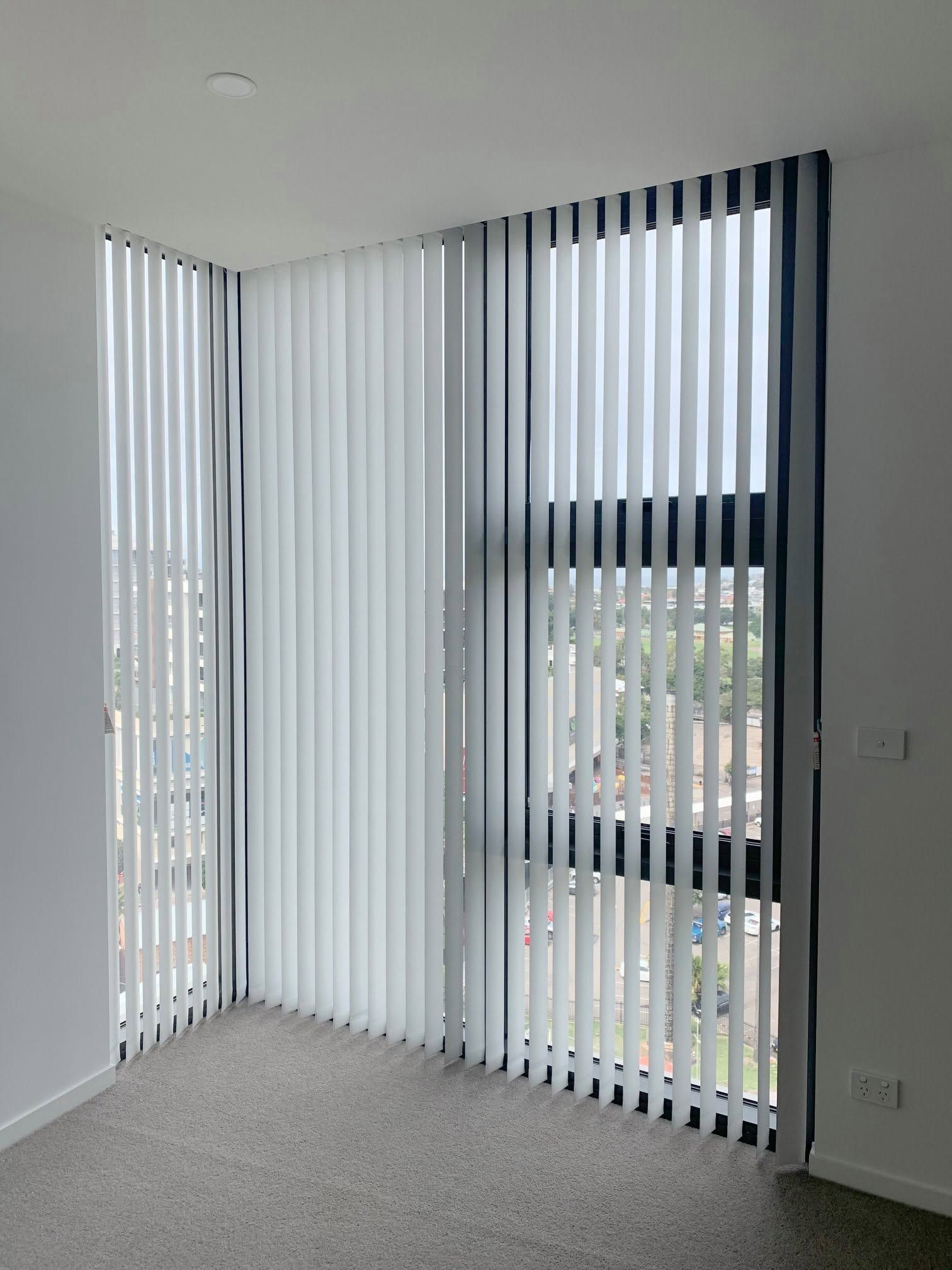
Vertical blind vanes typically come in two widths: 89mm and 127mm, and the difference matters more on a large window than people expect. On a wide opening, like a sliding door or a large living room window, a wider 127mm vane gives a cleaner, more streamlined look with less lines and also means fewer moving parts overall. On smaller or standard-sized windows, a narrower vane keeps the proportions right and avoids the blind looking heavy for the space.
Track and control configuration is the decision most people don't realise they need to make until the measurer is standing in front of the window.
Two things to think through before that visit:
- Which side does the stack & control chain sit on? This depends on which side of the window has clear wall space and which side you'll actually use to operate the blind day-to-day.
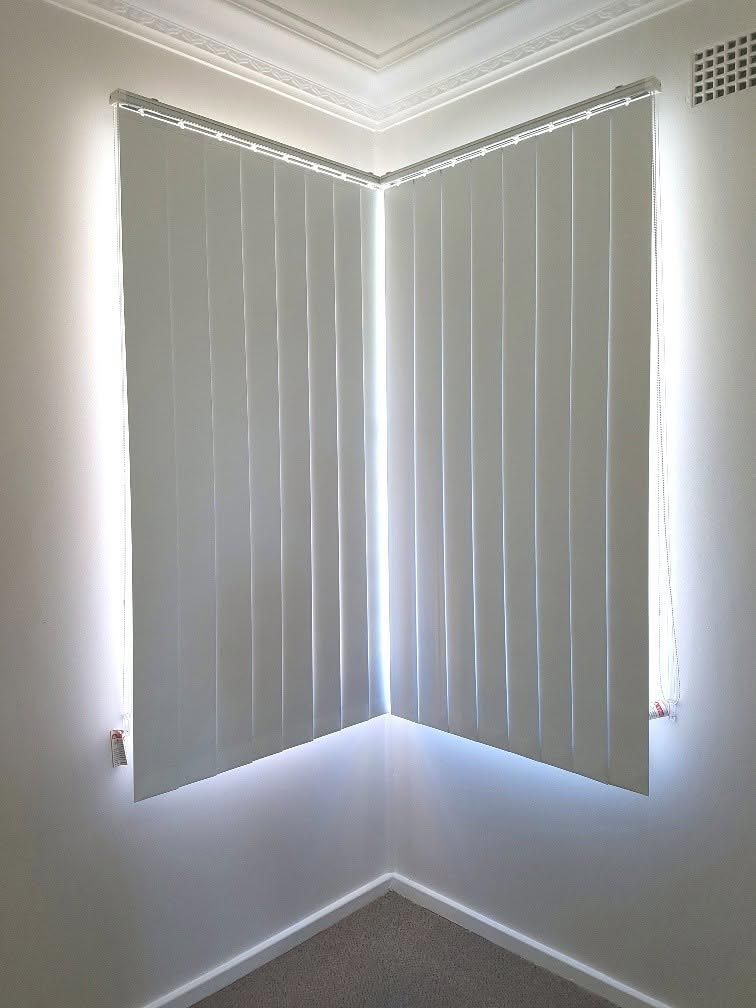
- Centre-split or one-way draw? A centre-split draw (opening from the middle outward) suits large sliding doors and picture windows, since it clears both sides evenly. A one-way draw suits corner windows or openings where one side needs to stay clear; for example, next to a doorway.
Getting this right before the measure and quote means you're not making the decision on the spot.
How Are Custom Vertical Blinds Measured & Made to Fit?
Because these are custom vertical blinds in Newcastle rather than a standard off-the-shelf product, the process starts with a free in-home measure and quote. This is also the point where you'll see and feel physical fabric samples in your own window's actual light, rather than trying to judge a colour or opacity from a small swatch under different lighting.
From there, the blinds are manufactured to the exact measurements taken, then installed. This also covers wide, extra-large or awkwardly angled windows and sliding doors, which is a common requirement across larger Newcastle, Lake Macquarie and Port Stephens homes with open-plan living areas.
If you're still deciding whether a vertical blind is the right product for the window in the first place, it's worth checking how vertical blinds compare to roller blinds for sliding doors and wide openings before locking in a fabric choice. And if you're weighing up whether vertical blinds still suit a more modern renovation, read more here on where they sit in current interiors.
If you're ready to see fabric, colour and slat samples against your own windows, book a free in-home measure and quote with Winning Blinds for vertical blinds Newcastle homeowners can trust and get a straight answer on what actually suits your home before you commit.
FAQs
What's the difference between blockout, translucent and sheer vertical blinds?
Blockout fabric stops light and view-through almost completely, translucent softens light while holding reasonable privacy and sheer prioritises a soft, layered look over privacy or light control. The right choice depends on the room's use and how much afternoon sun or overlook it gets.
Which fabric is best for a west-facing window?
Blockout is usually the better choice for west-facing living rooms and sliding doors, since it cuts the harsh, hot afternoon sun that these windows get across most of the year in Newcastle.
What slat width should I choose for a large sliding door?
A 127mm vane generally suits large sliding doors and wide living room windows better, giving a cleaner look with fewer lines. Narrower 89mm vanes suit smaller or standard-sized windows.
Can vertical blinds be made for extra-wide or angled windows?
Yes. Because they're custom-made to measure rather than sold as a standard size, vertical blinds in Newcastle can be manufactured to fit wide sliding doors, oversized windows and angled openings.
Do darker coloured vertical blinds fade faster in Newcastle?
Darker colours generally show fading and dust more noticeably than lighter tones, particularly on west and north-facing windows exposed to the Hunter's coastal light and salt air. A lighter, easy-wipe fabric is the more practical option for high-sun windows.
Do I need to decide on track configuration before the measure and quote?
It helps to have a rough idea of which side you'd like the control chain on and whether the blind needs to draw from the centre or one side, but the measurer will talk you through the best configuration for your specific window during the free in-home measure and quote.